|
Introduction
|
||||
|
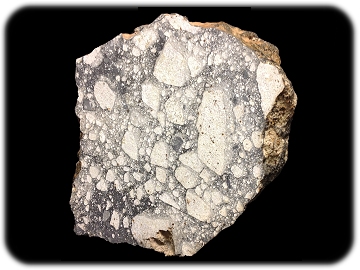
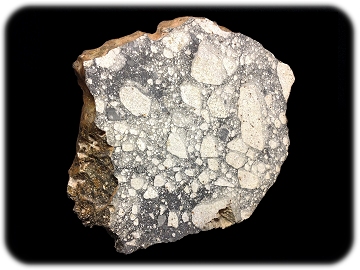
Northwest Africa 5000 is the largest meteorite from the ancient Lunar Highlands ever found. It is exceedingly important in that it represents a previously unexplored part of the Moon and is the only Highlands Gabbro available for study. Originally, it weighed a tremendous 25 lbs 6.6 oz. (11,528 grams.) Even at the current weight of 13 lbs. 5.73 oz. (6,072 grams), it is bigger than anything in the NASA Apollo collection. Although the weight is very impressive, its presence is awe-inspiring. When trying to portray Northwest Africa 5000, one may be at a loss for words -- it is simply too beautiful to properly describe but we will attempt to do so. The contrast is incredible. The matrix looks like a black and white intaglio print of the universe rendered by a spirited yet masterful artist. This stone contains breccias within breccias, |
 |
|||
|
and the preferential orientation of clasts lends a unique 3-D appearance to flat surfaces. A
generous amount of 4.5 billion year old gleaming metal is present, adding yet another striking
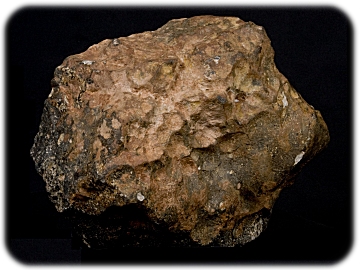
element to nature�s artwork. The exterior presentation is outstanding with well-preserved regmaglypts ("thumb-printing"
marks from atmospheric entry), areas of translucent fusion crust and attractive desert patina. Northwest Africa 5000 has become
legendary in the short period of time since its discovery in 2007. |
||||
|
"The Rock, A Superlative Meteorite From The Moon" |
||||
 |
 |
|||